
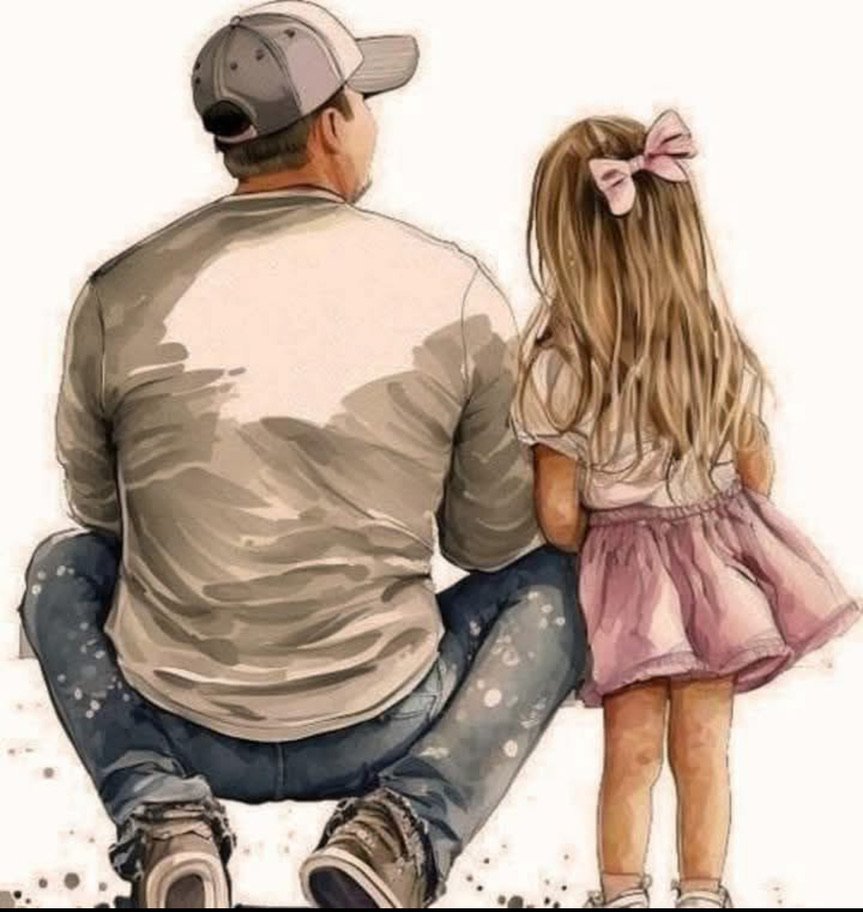
Child Development
Motor Skills
Extracurricular Activities
Indoor Activities
Outdoor Activities
"Children don't need us to shape them; they need us to respond to who they are." - — Gabor Maté
Knowing the Season
No grower tends a seedling the way he tends a grown tree, and no grower who knows his trade tries to rush either one. He reads what season the plant is actually in — what it can take, what it needs, what would break it — and he gives it that. A man who fertilizes a seedling like a mature trunk burns the roots. A man who leaves a sapling unstaked in the season it most needs the stake grows a crooked tree. The whole art is reading the stage in front of you and answering that, not the stage you wish it were in or the stage you yourself once were.
This is the second part of the Nursery, and it is the eye every good father has to grow. Child development is not a stack of parenting books. It is the ability to look at the actual child in front of you — this temperament, this age, this hard week — and read him honestly, instead of parenting the son you wanted or the boy you used to be. The father who cannot read his child accurately cannot father him accurately. He corrects a behavior whose cause he never understood. He panics at a phase that was always going to pass. He misses the quiet signal that the boy in the back seat is slipping away from him. A man learns to read the season. Everything else depends on it.
The Relationship Is the Soil — Gabor Maté's Approach
The guide for this part of the Nursery is Dr. Gabor Maté, the physician whose life's work has been the developing child and the relationships that form him. Strip his approach down to the studs and it comes to this: the relationship between father and child is the soil everything else grows in, and no technique works in dead soil.
A few things follow from that, and they reorder how most men think about raising a child.
Behavior is a message, not just a problem. When a child acts out, the modern instinct is to crush the behavior — punish it, suppress it, make it stop. Maté's eye sees underneath it: the behavior is the child telling you something he does not yet have words for. The tantrum, the defiance, the withdrawal, the lie — each one is a signal about a need that is not being met or a feeling the child cannot carry alone. A father still addresses the behavior. But he reads the message first, because correcting the surface while ignoring what drove it teaches the child only to hide it better.
Connection comes before correction — always. A child takes correction from a father he is securely bonded to and hardens against correction from one he is not. So a man does not spend his relationship with his child to win a behavioral battle. He keeps the bond intact through the correction, because the bond is the only thing that makes the correction land as formation instead of as a wound. You can be firm and stay warm in the same moment. The two were never enemies.
A child should never have to choose between being himself and being loved. This is the heart of Maté's work. A child has two deep needs — to be securely attached to the people who raise him, and to be his authentic self. When a father makes his love conditional on performance, on compliance, on being the child the father preferred, he forces the boy to bury his real self to keep the attachment. The boy learns to perform for love. He carries that bargain into every relationship for the rest of his life. The father's job is to make sure the child never has to make that trade — that he is loved as he is, even while he is being shaped into who he should become.
Hold on to your kids. Maté's sharpest warning for this era — from his book by that name — is that children today are increasingly attached to their peers instead of their parents, and a screen in every pocket has poured gasoline on it. A boy whose deepest orientation is to the other twelve-year-olds, or to whoever is on the other side of the device, is taking his cues about who to be from the least mature, least wise voices available to him. The modern father's first job is to remain the one his children are attached to — to matter more than the peer group and more than the screen — because a child only takes formation from someone he is actually bonded to. Lose the attachment and you have lost the ability to raise him, no matter how many rules you post on the wall.
A man takes all of that as his starting posture. It is not soft. It is the opposite — it asks a father to be more present, more attuned, and harder to pull away from than anything else competing for his child.
The Floor Beneath the Climb — Maslow
Abraham Maslow described human needs as a climb: a man cannot reach for the higher things until the lower ones are met. The same is true of a child, and it tells a father what to build first.
At the bottom sits the body — food, sleep, warmth, a safe place to be. Above that, safety — the predictable, stable home where a child is not bracing for the next blast. Above that, belonging — the certainty that he is loved and that he is ours. Above that, esteem — the earned confidence that comes from doing real things and being seen doing them. And only at the very top, self-actualization — becoming the full person he was made to be.
Here is what the climb tells a father: a child cannot work on the higher floors while the lower ones are missing. The boy who does not feel safe at home cannot focus at school — his body is spending its budget on survival, not algebra. The child who does not feel he belongs cannot build real confidence; he builds a performance instead. When a man cannot understand why his child is stuck, the answer is usually a floor lower than he is looking. A father builds the floor — the food, the safety, the belonging — so that his child has the solid ground to climb from. Most of what looks like a behavior problem is a missing floor.
The Seasons of a Child — Erikson
Erik Erikson mapped the human life into stages, each one a real crossroads the child has to pass through. A father who knows the map knows what season his child is in and what that season is asking of him. The first five carry a man from the cradle to the edge of adulthood.
Trust vs. Mistrust (infancy). The baby is learning one question: is the world safe, and will someone come when I cry? The father who answers — who shows up, who comforts, who is reliably there — builds a child who trusts. The neglected infant learns the world is not safe, and carries that suspicion for life.
Autonomy vs. Shame (the toddler). The two-year-old is learning I can do things myself. The "no," the insistence on the red cup, the wanting to do it alone — these are not defiance to be broken; they are the first roots of a will. A father gives him safe room to try and fail, and the boy grows confident. Shame him for every spill and the boy learns to doubt himself.
Initiative vs. Guilt (the preschooler). Now the child is starting things — inventing games, asking a thousand questions, leading the play. A father who encourages the initiative grows a boy who will start things his whole life. A father who treats every mess and every question as a nuisance grows a child who feels guilty for wanting anything.
Industry vs. Inferiority (school age). The child is learning I am good at things. He needs to build, finish, master, and be recognized for it. This is the season a father teaches skills and lets the boy earn real competence. The child who is never taught, or only criticized, concludes he is less-than, and that inferiority follows him.
Identity vs. Role Confusion (adolescence). The big one. The teenager is working out who am I, apart from my parents? This is supposed to be turbulent — the pulling away, the testing, the questioning are the work of the season, not a sign the father failed. A man stays present and stays the anchor without crushing the search, and the teen comes out the other side with a settled identity. Abandon him to figure it out alone — or refuse to let him separate at all — and he comes out confused about who he is.
A father does not panic at a hard season once he knows it was always coming. He answers it.
The Secure Base — Attachment
The deepest finding under all of this, and the one Maté builds on, is attachment: the child forms a working sense of whether the people I depend on are reliable, and that sense becomes the template for every relationship he will ever have. A child with a secure attachment — whose father was steady, responsive, present — explores the world boldly because he knows the secure base is there to come back to. The avoidant child, raised by a present-but-cold father, learns to need no one and grows into a man who cannot ask for help. The anxious child, raised on unpredictable response, grows into one who reads every silence as abandonment. The disorganized child, for whom the caregiver was both the comfort and the threat, grows up pulled toward closeness and terrified of it.
The father is the secure base. Not a soft one — a reliable one. The aim of everything in this part of the Nursery is a securely attached child, because secure attachment is the ground every later strength is built on. The deeper map lives in Attachment Theory.
And here is the hard mirror for a man: he tends to hand his children the attachment pattern he himself received. The father raised cold goes cold without noticing. The father raised on chaos brings chaos home. A man who never examined his own childhood will transmit it. But the pattern is not a life sentence — a man can become earned-secure, through honest work in SPIRIT and a good marriage, and break the line so his children inherit something better than he got. Doing that work is part of the job.
How a Father Tends — and What the Research Found
Decades of study on how parents actually raise children keep landing on the same four patterns. A father should know which one he is running.
Authoritarian — high demand, low warmth. Rules without relationship. Produces obedience on the surface and resentment underneath; the child complies until he can escape.
Permissive — high warmth, low demand. Love without structure. Produces a child who feels adored and cannot handle limits, frustration, or the word no.
Neglectful — low warmth, low demand. Neither there nor leading. The deepest wound of the four.
Authoritative — high warmth and high demand. Real bond and real structure, held at the same time. This is the one that consistently grows secure, capable, resilient children.
That last one is exactly where Maté's connection-first approach and the Nursery's stake-in-the-ground meet. Warmth without structure is the permissive ditch; structure without warmth is the authoritarian one. A father holds both — the deep bond and the firm expectation — because the boy needs both to grow straight. This is the work of Parenting Styles, the next part of the Nursery, and a man chooses his on purpose instead of inheriting it by accident.
Raising Sons and Raising Daughters
A father is not raising a generic child. He is raising boys and girls, and they need different things from him — especially now.
His sons are watching him to learn what a man is. Long before a boy can articulate it, he is studying how his father treats his mother, how he handles anger, how he works, whether his word holds. A boy will become some version of the masculinity he saw modeled, or he will go looking for it — in a peer group, on a screen, in whatever louder voice fills the silence a passive father leaves. A man gives his son hard things to master, lets him take real risk and recover from real failure, and shows him a strength that is under control. The boy needs his father's blessing on his manhood, spoken plainly. Most men are starving for a word their fathers never said.
His daughters are learning from him what a man is supposed to be, which sets the standard for how she will let men treat her for the rest of her life. A girl with an engaged, affectionate, trustworthy father does not go hunting for that affirmation in the arms of the first boy who offers a counterfeit. The research is blunt about this — a father's steady presence and warmth are among the strongest protections a daughter has. She needs his time, his delight in who she is, and his protection without his control. A man tells his daughter she is worth pursuing well, by being the first man who treats her that way.
In the modern age, both jobs are harder than they have ever been. The screen and the peer group are bidding for the child's soul every waking hour, and the culture is feeding both sons and daughters confused, hostile scripts about what they are. This is exactly why Maté's warning lands so hard: a father has to matter more — be more present, more attuned, more clearly the anchor — than the entire device-fed world competing for his child. He cannot out-shout it. He can only out-love it, by being the one his children are actually bonded to.
How a Man Goes Wrong Here
The misreads are common. Name them so you catch yourself.
Parenting a projection. He fathers the child he wanted — pushing the artistic boy toward the career he prefers, praising only the responses that match his picture. The child grows up unseen by a father who was there every day. A man examines the projection and refuses to let it run underneath his love.
One size for every child. He runs the same style on every kid regardless of temperament — the same volume at the sensitive son and the thick-skinned one. A man knows each child individually and adjusts to the one in front of him.
Misreading the season. He treats a passing phase as a character defect — the toddler tantrum met with discipline meant for a ten-year-old, the teenager's pulling-away met with a rupture he spends a decade repairing. A man reads the stage before he reacts.
Comparison. He measures his child against the sibling, the neighbor, the chart — and the child absorbs the disappointment. A man measures his child against the child's own arc.
Reaching for a diagnosis. He runs every hard phase through the clinical vocabulary until an ordinary kid is labeled and starts living inside the label. Real conditions exist and deserve real care — but a man does not march a child through the diagnostic mill for normal variation.
Outsourcing the watching. He hands the daily developmental attention to the school, the coach, the wife, and shows up only for the big moments. A man does the small daily noticing himself, because the arc is made of small days.
Loving the easy child more. He pours into the kid who is easy to parent and gives the difficult one correction without connection. A man checks whether his attention follows the child's need or just the child's ease.
Fathering through a phone. He is in the room and on the device, and the child learns that his father's attention is always half-elsewhere. A man guards the table, the bedtime, the drive, the morning, as places his children get all of him.
Child Behavior Becomes Adult Behavior
What a child does not outgrow on his own, he carries — in adult clothing — into every relationship he ever has. Children run away from you; adults avoid confrontation. Children sulk in the corner; adults give the silent treatment. Children shut down; adults call it being stoic. Children throw tantrums; adults erupt, rage-text, and vent. Children slam doors; grown men slam doors too. The pattern a father helps his child work through now is one less wound the grown man will hand his own wife and kids later. The stakes of a Tuesday afternoon reach further than the Tuesday. A man fathers with the whole arc in view.
What This Part of the Nursery Holds
Reading the child well opens onto the specific work of growing him:
Academic Development — their mind: education, comprehension, logic and numbers, how he actually learns. A father owns the cognitive formation instead of handing it whole to the school.
Child Activities — their experience: sports, arts, indoor and outdoor play, the things he tries and the few he comes to love. A man exposes him widely, then deepens where the real spark is.
Child Character Development — their soul and their manners, where the Nursery meets the SPIRIT Kingdom's character work. A father claims the primary role in forming who his child is.
Children's Health — their body: food, sleep, screens, resilience, the HEALTH Kingdom started early so the grown man inherits a foundation instead of a repair job.
Youth Athletic Development — their physical mastery: motor skills, coordination, athletic capacity built in the windows when it develops best.
Tools & Resources - Child Development — the maps and the people, from Attachment Theory to the practitioners a father learns from.
Where Maté Stops and Scripture Continues
Maté's developmental science is real, and it is humbling — it has taught a generation of fathers that the relationship matters more than the rulebook, that behavior is communication, that a child raised in dead soil cannot grow. A man takes all of it gratefully. But Maté works from a frame that stops short of the deepest truth about a child, and a father has to supply what the science alone cannot.
Maté sees the child as a bundle of needs to be met and wounds to be healed. Scripture sees all of that and more — a child is an image-bearer of God, with a soul to be shepherded and a will that is bent, from the start, in directions that attunement alone will not straighten. Meet every need perfectly and you will still be raising a sinner, because so are you. That is not a counsel of despair; it is the realism that keeps a father from believing he can engineer a perfect child by perfect technique, and the humility that keeps him on his knees for a child no method can save.
So a man holds both. He attunes like Maté teaches — and he disciplines, because Scripture says the father who withholds correction does not love his son but hates him (Prov 13:24). He meets the child's needs — and he forms the child's will, training him in the way he should go (Prov 22:6) rather than only responding to the way he already is. He brings his children up in the discipline and instruction of the Lord, and he is warned in the same breath not to provoke them to anger (Eph 6:4) — the whole authoritative balance, named two thousand years before the research confirmed it. Where Maté ends with a well-adjusted child, Scripture aims higher: a child handed on to God, and a father who knows he was only ever a steward of a soul he did not create and cannot finally save. Attunement and truth. Connection and the cross. That is the fathering the Nursery is built for.
The Three Pillars in Child Development
Three questions filter how a father reads and answers his child. TRUTH. LOVE. LAW. Always in that order.
TRUTH is seeing the actual child — the real temperament, the real season, the real need under the behavior — instead of the projection of who a man wanted or who he himself was. Honest sight is where all of it starts.
LOVE is attuned, responsive presence aimed at who the child actually is. A man answers the real need in the real moment, not the program he planned to deliver — because that responsiveness is the soil attachment grows in, and attachment is the ground of everything after.
LAW is the structure the child cannot yet build for himself — the rhythms, the limits, the firm expectations a father supplies from the outside until they become the spine the child carries inside. Held together with warmth, never instead of it.
Goal and Process
Goal: well-rounded, imaginative, confident, righteous, and independent members of society.
Process: love learning, and embrace challenges.
The Goal names what a father is actually growing — not a credential, not a trophy, not mere compliance, but a whole person the world will one day receive when the child leaves the home. The Process names how it happens — by raising a child who loves to learn and is not afraid of a hard thing. Grow those two, and most of the rest follows.
What This Feeds
Reading his children well feeds the wider program: the children's character is the seed of the next generation's SPIRIT, their bodies the start of its HEALTH, their minds the ground of its SMARTS, and their growing competence the first root of its DEFENSE. The eye a father grows here also tells him which way to lean in Parenting Styles and where to spot the patterns that wound in Toxic Parenting.
But reading the child is only half of it. A seedling read perfectly still gets flattened if nothing stands between it and the weather. Everything a father learns to see in his child grows up inside something — a home, a culture, a shelter a man either built on purpose or left to be thrown together by default. Before any of it can be tended, the roof over all of it has to be set, and the man holding the structure has to decide to lead the home instead of merely managing it. That is the work the next part of the Nursery hands him.