
Meditations & Reflections
Inner Dialogue
Life Lessons
Perceptions of Reality
"The unexamined life is not worth living." Socrates
Stage I: Encounter
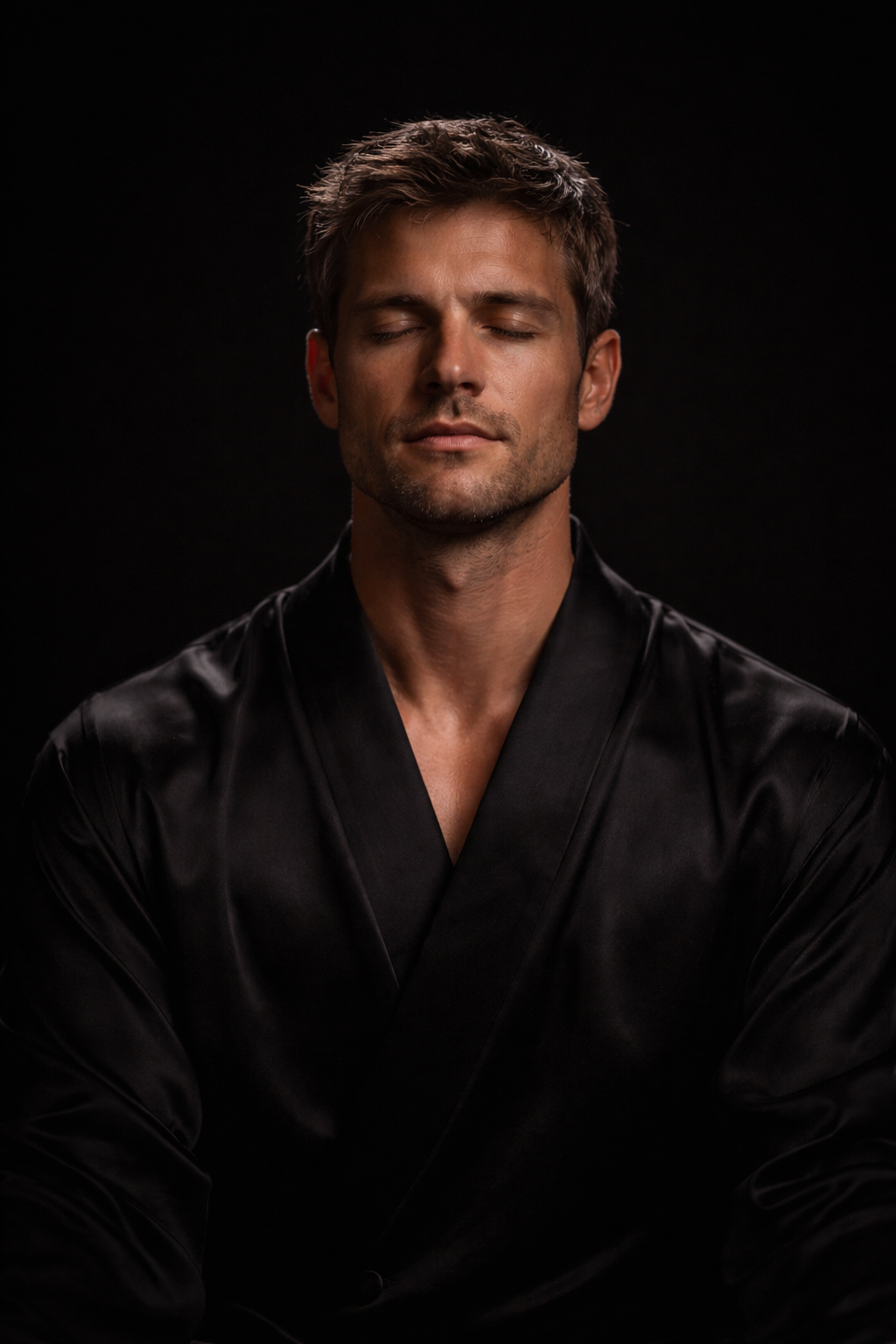
Be still. That instruction will feel like a threat before it feels like a directive.
Everything in you has been trained toward motion — toward output, toward the next domain, the next kingdom, the next thing to build. Stillness is the one country you have never fully entered. It is also where the Shadow lives. This kingdom does not teach you anything. It surfaces what is already in you. What rises when the noise finally stops is not random — it is the whole composite of what you carried through seven domains and never resolved: the patterns you noticed and filed away, the decisions you made and never examined, the version of you that ran in the background while the capable, admirable version built in the light. That version is here now. It has been waiting for the silence, because the silence is the only place it cannot be outrun.
Meditations & Reflections is the first stage of the Shadow Campaign — the Encounter. The Elder's directive is one sentence: do not look away. What surfaces is yours. The man who cannot sit alone without noise or distraction will manufacture a reason to bolt back into one of the seven domains and call the fleeing productivity. Stay. What the silence shows you is the beginning of everything that follows.
The Examined Life
Here is a thing worth noticing before you go any further. The wisest men history ever produced almost all did the same private, unglamorous thing — they got still, turned the gaze inward, looked honestly at their own lives, and wrote down what they found.
This very section carries the name of the most famous example. Meditations was not a book a Roman emperor wrote to be published. It was Marcus Aurelius alone at night, the most powerful man on earth, writing notes to himself — about his own pride, his own mortality, how short fame is, how little of what men chase actually matters. Solomon did it in Ecclesiastes, the king who owned everything sitting down to reckon with what any of it was worth. Augustine did it in the Confessions, tracing his own disordered loves with a brutal honesty most men never turn on themselves once. Pascal did it in fragments. David did it in the Psalms, in the open, before God. These were not men reporting on the world from a safe distance. They were men examining themselves — and that interior honesty is exactly what made them wise.
This is what separates this kingdom from the Philosophy you built back in SPIRIT. SPIRIT taught you how to think about the world. This is where you sit with your own life. And it runs two ways at once. Here you read the reflections of the wisest men who ever lived — their meditations, their memoirs, their hard-won perspectives on people and time and what a life is actually for. And here you take up the same discipline they did: the deliberate, repeated, honest examination of your own self. You are not just studying the examined life. You are being asked to start living one. The unexamined life, the philosopher said at his own trial, is not worth living — and he meant it as a warning, not a slogan.
The Conclusion the Wise Keep Reaching
Read enough of these men and something unsettling starts to happen. They lived in different centuries, spoke different languages, worshiped at different altars, never read each other — and they keep arriving at the same conclusion from a thousand separate roads.
Most of what men spend their lives chasing is wind.
Vanity of vanities; all is vanity (Ecclesiastes 1:2). The king who had more wealth, more women, more building projects, more accomplishment than any man of his age sat down at the end of it and called the whole pile a chasing after wind. The emperor wrote that fame is forgotten within a generation and the men who hand it out are themselves dust. Across the whole literature of human reflection, the refined men keep telling you the same plain and inconvenient thing: the status, the winning, the proving, the accumulation — almost all of it is fleeting, and a man who builds his life on fleeting things builds on sand. This is not despair. In their mouths it is mercy. They are trying to save you the decades they wasted finding it out the slow way, and they are pointing — every one of them, even the ones who could not yet name where the finger landed — past the fleeting toward the one or two things that are not. This kingdom shows you what is wind. The next one, Life's Treasures, shows you what is not.
The Mark of a Refined Man
The examined life produces a particular and rare kind of man, and you have probably met one without knowing what you were looking at — or worse, you mislabeled him.
He is the man with superb command of language who uses very little of it. He lets a conversation breathe. He does not speak over you. He answers the thing you actually said, not the thing he was waiting to say. He cheered you up when you were down instead of using the opening to bring the talk back around to his own troubles. He is the friend who helped you move your entire house and never once mentioned the shifts he rearranged to be there — and did not throw it in your face when you showed up late. He keeps no ledger. He is, in a word the world rarely uses correctly, refined — and refinement is not polish, it is the residue of a man who has examined himself enough to stop needing the moment to be about him.
These men are rare, and rarer still recognized, because before a man is fully refined the world tends to call him weird. The unrefined have no category for a man who keeps no scorecard, who doesn't compete for the floor, who is unbothered by going unthanked. His quiet self-forgetfulness reads to them as odd, and they file him under strange and move on, never understanding that they just walked past the most finished man in the room. He got that way the only way anyone does — by the long, private, unwitnessed work this kingdom is built on. He turned the examination inward, owned what he found, and slowly stopped being ruled by the parts of himself that smaller men are still run by. The man you want to become is on the far side of the same work.
The Chambers of This Kingdom
The reflective work sorts into three rooms, and each turns the gaze onto a different part of the man.
Introspections — seeing yourself as you really are. The examination of your own thoughts, feelings, and motives — the parts of the self that have been ignored, undervalued, or carefully avoided. Its rooms are the instruments of that work: Self-Reflection (the discipline of looking back on your own decisions without either flattering yourself or flogging yourself — honest review for the sake of growth, not punishment), Inner Dialogue (learning to hear and govern the voice that never stops talking inside you), and Contemplations (the caught moments — the small flash of arrogance you mutter under your breath in a parking lot, the grace you are shown in it, the quiet repentance no one sees). Introspection is the courage to look in the one mirror that does not lie and not turn away from what it shows.
Life Lessons — what living actually taught you. Wisdom does not come free; it comes as the bill for experience, and this room is where you read the receipts. The School of Hard Knocks is the hard way — the wisdom the stubborn only ever buy at full price, paid out in consequence, in Broken Hearts & Broken Homes and Rottings Roots, the lessons branded into a man because he refused to learn them any cheaper. The Wise Teachings of Life is the gentler ledger — the lessons gathered and kept so that they compound instead of repeating. The wise man examines his hard knocks until they become teachings. The fool keeps paying for the same lesson and never reads it.
Perceptions of Reality — refining the lens. Every man sees the world through a lens ground by his wounds, his upbringing, his appetites, and his fears, and the first act of wisdom is the humbling admission that your view is partial and bent. But hear the turn, because it matters: this is not the fashionable lie that your perception simply is your reality, that each man authors his own truth. The opposite. Precisely because the lens distorts, the work is to grind it clean — to keep correcting your perception against the truth that stands there whether you see it rightly or not. And the deepest distortion is the one you most resist looking at: Overcoming the Shadow, the silhouette you have spent your life hiding from, the arch-nemesis who turns out to be you. The work there is neither to pretend the darkness isn't there nor to indulge it, but to drag it into the light, name it, and put it under authority — a man who knows his darkness, rules it, and has stopped being surprised by it.
The Gate
Do not mistake the stillness for the easy stage because it asks you to sit down. It is the hardest threshold most men ever face, precisely because there is nothing to do — no domain to conquer, no metric to move, no audience to perform for. Just you, the silence, and what rises in it. The man addicted to motion experiences that silence as a kind of dying, and many turn around right here, at the very first gate, and spend the rest of their lives calling the retreat being busy.
Stay seated. The Elder is not testing whether you can think impressive thoughts. He is testing whether you can be still long enough to let the truth about yourself surface, and honest enough not to look away when it does. Everything the rest of MASTERY will require of you begins with that one refusal to flinch. What surfaces in the silence is yours — and it is the beginning of everything that follows.
But seeing is only the first stage. What the silence shows a man, it then demands he do the harder thing with — not admire the insight, not narrate his own depths from a safe distance, but understand what he saw in the way that rearranges the man who saw it. The Encounter ends here. What surfaced in it does not go back under.
Go to Stage II — Knowledge & Wisdom
"Until you make the unconscious conscious, it will direct your life and you will call it fate."
Carl Jung