
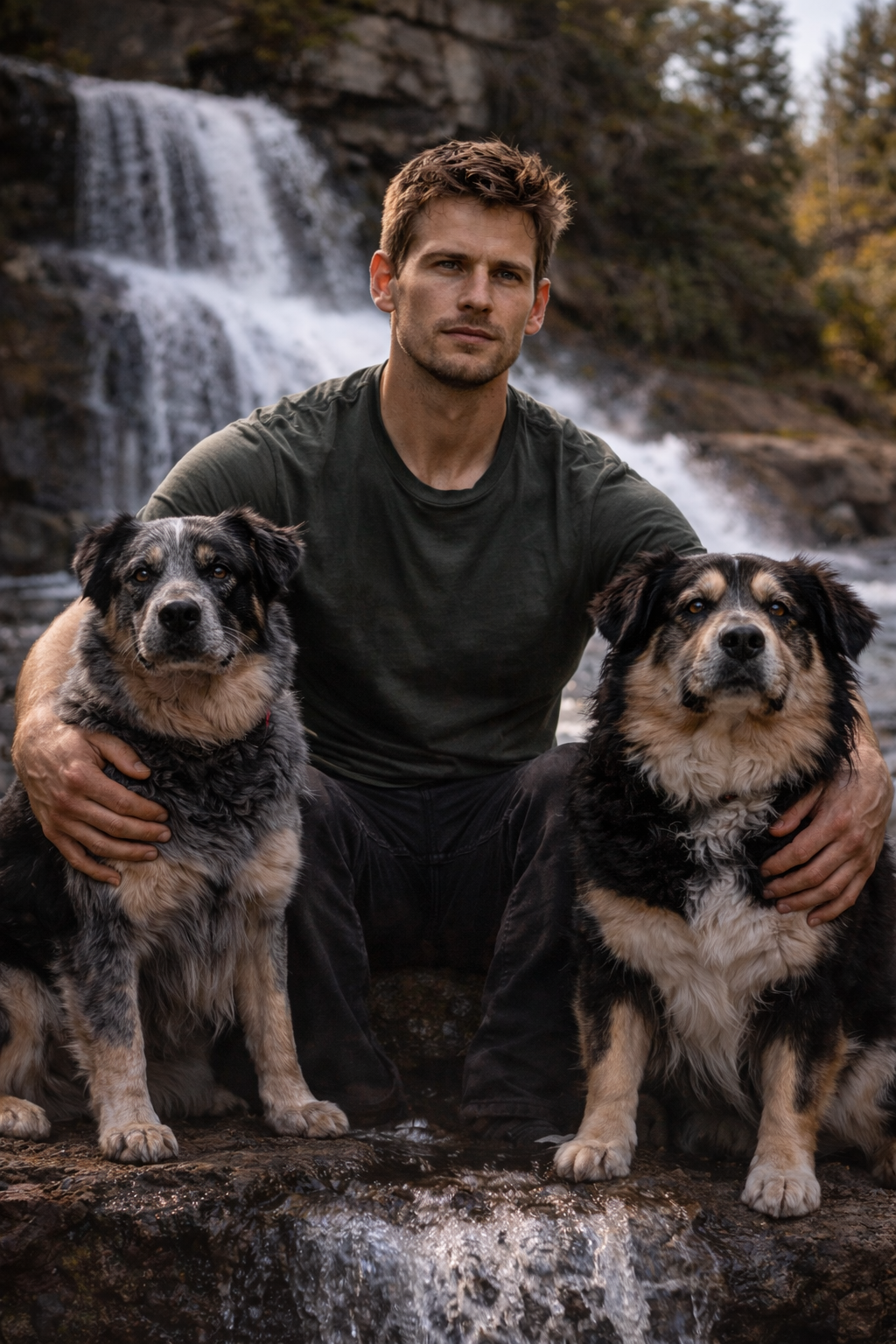
Pets & Animals
Raising Canines
Horses & Horsemanship
Livestock & The Homestead
"The righteous care for the needs of their animals, but the kindest acts of the wicked are cruel." — Proverbs 12:10
🐾 Man's Best Friend 🐾
The dog is already at the fire when the Shepherd brings you back to it. He has been there the whole time, lying where the heat is best, lifting his head when the door opens, following the Shepherd out to the barn and back without being asked. "Watch him a minute," the Shepherd says. "He didn't earn his spot here and he can't pay for it. He can't argue with me, can't bargain, can't quit and go find a better man down the road. He decided I was his, and he has never once changed his mind." He scratches the dog behind the ear. "Everybody else you met at this fire is holding the other end of a rope. This one isn't. Which is why he tells the truth about you faster than any of them."
There is a reason the dog has been called man's best friend for as long as men have written anything down. No other creature volunteered for us the way this one did. It left the wild, lay down by the fire, and threw in its whole short life with ours for food, shelter, and a place at our feet. A man can go his whole life without being loved that plainly by another human being. The dog offers it on the first day and never takes it back. And the dog is only the first of them. Out past the barn there is a horse that will learn your voice and a hillside of stock that will learn your truck, and every one of those creatures is a bond with something that cannot speak for itself, and every one of them is a mirror.
You rode onto this Estate on a horse the Shepherd saddled for you. You did not think about it then. You are going to think about it now.
The Clean Mirror
Here is what the Shepherd wants you to see. Every human being in your life can push back. Your wife can refuse a pattern. Your friend can name a failure and demand you fix it. Your grown child can sit you down and tell you what you got wrong. The animal cannot. The dog in the yard cannot file a complaint. The horse with the bad hoof cannot go find a better keeper. The hens do not know the difference between a man who forgot them and a man who never cared, and they die the same either way.
That is what makes the animal the cleanest reading of a man's character there is. How he treats the creature with no recourse, when he is tired, when he is broke, when the dog is being inconvenient and nobody is watching, is who the man actually is underneath the version everyone else gets to see. The house with the half-starved, untrained, ignored dog chained in the back is almost never a house running on real order, no matter how it looks from the street. The dog tells the truth. The family photos do not.
So a man uses the mirror on purpose. He checks how he treats the animal in his worst hour, not his best. He notices whether the dog still gets walked during the busy season, whether the vet bill gets paid during the tight one, whether the old animal that stopped being cute still gets the same hand on its head it got as a pup. A man who passes that test has proven something no human relationship can show him quite as plainly. And the love runs back the other way. The man whose guard is too high to be fully soft with people finds himself loved wide open by the dog at his feet, no performance required, no explanation, nothing to have figured out first, and years of being received like that will soften a man in a way nothing else reaches. The dog asks nothing but his presence. In giving it, the man is quietly trained for the people who need the same thing and are harder to give it to.
How a Man Goes Wrong Here
The failures with animals are common and mostly quiet, and they nearly all begin with a man thinking about himself when he should have been thinking about the creature.
Keeping the animal as a prop. He picked the breed for what it says about him, the tough dog, the rare dog, the status dog, the horse he cannot ride, and never once engaged the actual creature or the work it needs. The animal is decoration for his self-image. A man chooses an animal for how it fits his real life, not for the message it sends the neighbors.
Treating the animal as disposable. It was cute, then it was work, then it was gone. Rehomed when it got big, surrendered when the baby came, sold when the board bill came due, written off the moment it became inconvenient. The reasons always sound plausible. They are usually cover. A man counts the cost before he brings a creature home, and once it is home, he keeps it for the whole of its life.
Neglect by drift. No single cruel act. Just chronic under-care that adds up across years. Not enough exercise. Skipped vet visits. No training. No company. Hooves gone six months too long. The animal's whole life quietly diminished by inattention. A man treats the creature's real needs as a real obligation, not an optional one.
Turning the animal into a person. He feeds it off his plate, lets it run the house, hands it freedoms its species cannot handle, and then complains about the behavior he created. Indulging an animal in the ways it does not need while neglecting the ways it does is its own kind of failure. A man loves the animal as the animal it is, not as a furry child.
Never training it. He brought the dog home and taught it nothing, let it build every habit the household now resents, and blames the dog for problems he created by abdicating. An untrained dog is a man's failure wearing a leash, and an unhandled horse is the same failure with hooves. A man trains the animal to live well inside his home.
Asking the animal to replace people. The dog became the whole heart because the marriage failed or never happened. The barn full of animals stands in for the family that was supposed to be there. Sometimes that is a season, sometimes a choice, but a man learns to tell when the animal is being asked to carry weight it was never built for, and does the human work in SPIRIT and at the next fire instead of leaning the whole load on a creature that cannot bear it.
The Three Rooms Off This Fire
Three rooms open off this part of the Estate, and they run from the creature that sleeps at the foot of the bed to the ones that live at the far end of the property. Each one asks more of a man than the one before it. Each one hands to the next.
Raising Canines — the dog. The creature most fully woven into a man's daily life, and the one this ground treats first. What it eats and how much, the walking that keeps it sane and keeps the man moving, the grooming and the nails and the teeth, the vet across the whole life, the training that gives it a bigger world and the household a livable one, the trips it comes on and the ones it stays home from. Most men will keep a dog and nothing else, and everything the rest of this ground teaches, the dog teaches first.
Horses & Horsemanship — the horse. The animal that carried this Estate's whole story, and the one that will not let a man lie to himself. A dog forgives a bad handler. A horse simply stops listening, and a thousand pounds of prey animal that has stopped listening is a different kind of problem than a dog that pulls on the leash. Choosing one and keeping it, the ground work that turns fear into trust before a saddle ever goes on, and the saddle itself. The horse is where a man finds out whether his steadiness is real, because the horse reads his hands, not his words.
Livestock & the Homestead — the stock. The creatures a man keeps for what they give: the hens in the yard, the goats and the sheep on the hill, the family cow, the steer in the back pasture. This is the oldest work on earth and the part of it the modern man has never done, and it ends in the one room the other two never reach, the day a man takes the life of a creature he raised, to feed the people he loves, and does it well. The stock is where stewardship stops being a word.
What Keeping an Animal Actually Takes
Whatever the creature, the work underneath it is the same, and none of it is glamorous. The Shepherd names ten things, and the man who does all ten has kept an animal well. The man who skips any of them will find out which one within the year.
Choose for the life you actually have. The space, the hours in the day, the money, the energy. The working dog in a one-bedroom apartment, the horse for a man who travels forty weeks a year, the goats on a lot the city will fine him for, all of these end the same way, and the animal pays for the man's fantasy. He chooses the creature that fits the life, not the life he wishes he had.
Learn what it eats. A dog is not a cat, a horse is not a cow, and a hen is not a decoration. Every species has a diet it was built for and a list of ordinary things that will kill it. He learns both before the animal comes home.
Keep the vet. Not the emergency vet. The regular one, once a year at least, who knows the animal and catches the thing early. Prevention is cheaper and kinder than the response the absence of it produces, and the man who skips the checkup to save money pays it back with interest.
Work its body and its mind. The dog needs the walk, the horse needs the ride or the ground work, the cat needs the hunt in some form, the stock needs room to be what it is. A bored animal invents a job, and a man rarely likes the job it picks.
Make the place safe. The fence that actually holds. The yard without the thing that poisons. The barn without the loose wire. The animal lives inside whatever the man built, and it cannot fix what he left wrong.
Train it and let it meet the world. The dog that knows six words and has met a hundred strangers gets to go everywhere. The horse that has been handled every day can be caught in the field. The one that was never trained lives a smaller life, and the household lives a harder one.
Learn its language. The dog's ears, the horse's, the hen that has gone quiet. Every creature is talking all the time, and the man who reads what the animal is actually saying answers the animal instead of his own idea of it.
Plan for the day you are gone. The sitter, the boarding, the neighbor who feeds the stock, the evacuation plan that includes the animals instead of leaving them tied in a barn with the water rising. A man who has not thought about this has not finished thinking.
Keep the rhythm. Feed at the same time. Walk at the same time. Milk at the same time, because the cow does not care that it is Sunday. Animals live by routine and are calmest inside one, and the routine is the cheapest gift a man gives them.
Put your hands on it. The time on the floor with the dog. The hand on the horse's neck for no reason. The animal that has been touched with affection every day of its life is a different animal from the one that was only ever handled to be moved, and the man is a different man for having done it.
Training: The Long Argument About the Leash
A trained animal gets to have a bigger life, and an untrained one is a prisoner of its own habits. So a man does well to know how the training has been argued about, because the argument is more than a century old and every good trainer is standing on some piece of it. The full work lives in the rooms. The map is short.
It began with a Russian physiologist ringing a bell before he fed his dogs, until the bell alone made them drool. That is association, and it is the bedrock under everything: an animal learns to link one thing with another, which is why a click or a sharp yes can come to mean anything at all. Then an American showed that behavior is shaped by what follows it, that what gets rewarded repeats and what gets ignored fades, and the trainers who could not put a leash on a dolphin took that idea off the marine-mammal dock and brought it to dogs. Mark the instant the animal gets it right, then pay. A newer generation built whole schools of puppy work on early socializing and lure-and-reward, and put the method in front of millions on a screen. And then one man moved the conversation back to the human end of the leash, to calm, to real exercise, to a handler who leads instead of pleads, and the trainers who followed him added fair, well-timed corrections on top of the reward and have been arguing with the reward-only camp ever since.
The horse world had the same argument fifty years earlier, and settled it in favor of the men who gentled instead of broke. You will meet them in their room.
Where this Estate lands: the bond first and the leadership inside the bond, a foundation of reward always, and corrections, when a man uses them at all, fair, timed, and humane. The verse over this fire is the fence around all of it. The righteous care for the needs of their animals. A man can be firm with a creature and still be gentle. The man who confused harshness with leadership has misunderstood both.
The Three Pillars Here
Three questions sit under every creature a man keeps. TRUTH. LOVE. LAW. Always in that order.
TRUTH is seeing the creature as it is. The species, the breed, the real temperament, the real needs, the real cost in hours and dollars across the whole of its life. Not the prop, not the ornament, not the furry child, not the horse in the movie. A man cannot care for a creature he refuses to see, and most animal cruelty in this country is not sadism. It is a man who never looked.
LOVE is caring in the language the animal can actually receive. The dog needs walking, not table scraps. The horse needs handling, not sentiment. The hen needs a roof and a run, not a name. A man delivers what the creature can use and learns to take the plain, scoreless love it offers back, a bond that is real even though it runs outside every category the human bonds use.
LAW is the obligation kept across the whole life, not just the easy years. Through the move, the tight budget, the busy season, the old age when the animal is no longer photogenic and the bond is mostly vet bills and patience. A man brought the creature home. The vow runs to the end of its life, not the end of its convenience, and if he keeps stock, it runs all the way to the day he ends that life himself, and does it right.
Walked as One Ground
The three rooms are the same skill worn at three weights. The dog teaches the daily faithfulness. The horse teaches a man that his body is talking whether he likes it or not, and that a prey animal hears it first. The stock teaches him that stewardship has a cost at the end that he has to be willing to pay with his own hands. A man who keeps only a dog has learned the first lesson well, and that is most men, and it is enough. A man who keeps all three has learned that the same hand that scratches the dog's ear and settles the horse's neck is the hand that ends the steer's life cleanly, and that none of those is a different kind of love.
And the ground feeds the rest of the Estate. It runs into HEALTH, because the dog has to be walked and the barn has to be mucked, and a man's body gets the daily work his desk would never have handed it. It feeds DEFENSE, because a trained dog is part of how a household is guarded and a man who can handle a spooked horse can handle most things. It runs into the Exchange, because the eggs and the milk and the beef are a household economy, and the kids who sell the extra learn what a dollar is. It echoes SPIRIT, because tending a creature that cannot demand justice is a small rehearsal of the gentleness God shows the weak, practiced first on the animal and then carried to the people. And the children are watching the whole time. How a father treats the family dog is the first lesson they ever get in how the strong are supposed to treat the weak.
Where This Ground Stops and Scripture Continues
This ground teaches a man to keep what cannot keep itself, and a man who does it well has a household where the weakest creature in it is safe. What the ground cannot tell him is why any of that should matter to anyone but him. The dog will never know it was treated well. The steer will not thank him. Nobody is keeping the score, and the mirror only shows a man his own face.
Scripture says somebody is watching, and that He watches the small things on purpose. Are not two sparrows sold for a penny? Yet not one of them will fall to the ground outside your Father's care (Matthew 10:29). When Jonah sat outside Nineveh sulking that God had spared it, God's last word to him counted the people, and then added and also many animals (Jonah 4:11). The cattle were on the ledger. The One who made the creatures did not stop caring about them when He handed them to us, and a man who keeps an animal is keeping something that belongs to someone else. He provides food for the cattle and for the young ravens when they call (Psalm 147:9).
And there is the harder thing under it, the one the mirror was for all along. The dog loves a man who did nothing to earn it. The horse comes to a man who has not yet proven he deserves it. The creature with no recourse, fed and kept and touched by a hand it could never repay, is the truest picture on this whole ground of what a man himself is, standing in a barn he did not build, kept by Someone he cannot pay back. The ox knows its owner, the prophet said, and the donkey its master's manger, and then said the people did not (Isaiah 1:3). A man who has spent years being loved scoreless by an animal has been shown, every morning of those years, exactly what is being done for him. He is honored when he finally sees it. He is only ever practicing until he does.
What the Mirror Was For
Before you walk to the kennel, hear what the Shepherd is going to say at the far end of this ground, because it will make more sense now.
You are going to spend this ground with creatures that keep no score. The dog loved you the first day. The horse will come to trust you without a word being right. The hens do not care what you said last night. It is the gentlest place on the whole Estate to learn, and it is gentle for a reason: none of them can be hurt by you the way a person can. They can be neglected. They cannot be betrayed. There is no promise a dog can hold you to, and no wound you can leave in a horse that a better man cannot heal. The creature was always safe practice.
That is exactly why the Shepherd saves the next fire for after it. Everything you learn here, the daily faithfulness, the steady hands, the patience with a thing that cannot explain itself, is for a bond that is the animal's opposite in every way that counts. One person, chosen on purpose, who can see all of you, who can keep score, who can stay or go, and whom you will ask to hand you her whole heart anyway. She will be hurt by exactly the failures the dog forgave. The horse taught you to be steady because it could not follow a man who was not. She will follow a man who is not, for a while, and it will cost her, and that is the difference between practice and the real thing.
So learn it here where the stakes are low. Then carry it to the smallest, hottest fire on the property.