
Shoot Wrestling
Ninety Minutes in the Dome
Tokyo, May 1, 2000. Fifty thousand people in a domed stadium, and in the ring a small Japanese man in orange trunks is grappling with the man who won in Denver. There is no time limit. There are no rounds in the way a cage has rounds; the family demanded the old rules, fifteen-minute periods without end, and got them. The small man has come to the ring in a mask, as he sometimes does, and taken it off, and the crowd loves him in a way the family cannot understand, because to them he is a professional wrestler, which is to say a performer, and they have spent seventy years proving that performers cannot fight.
It goes ninety minutes. Six periods. The small man wrestles, stands up, kicks the family's champion in the legs until the legs stop working, wrestles again, and never once looks tired or afraid or in danger, and at the end of the sixth period the family's corner throws in the towel, and the man who beat the world in Denver has been beaten in Tokyo by a professional wrestler with holds from a carnival tent.
"He was a shoot," the Warrior says. "Everybody in that building knew what that word meant, and half the people watching in America didn't. That's the whole story of this room. The Japanese took the art from the tent and built rings for it, and some of those rings were real and some of them were pretending to be real, and the men inside them knew exactly which, and the crowd had to learn. The last room on this mat is going to ask you the same question about yourself, and it's going to use their words."
This is the second branch the tent grew, on the far side of the world from the first: shoot wrestling, the Japanese line of catch wrestling that ran from the god of wrestling's dojo through a series of rings that wanted to be real, into the promotion that ran the first fully real fights two months before Denver, and into the hands of the small man in the mask. It is history and information, no Three Pillars block, and it hands the reader two words on the way out.
The God of Wrestling
The Belgian who learned in the shed in Wigan and took the Iowa champion's name went to Japan in the 1970s, and Japan gave him a title no one has given a wrestler before or since. They called Karl Gotch the god of wrestling.
He was the trainer at the dojo of the country's largest wrestling promotion, and what he taught was the Snake Pit: the hooks, the bridges, the endless bodyweight conditioning, the hundreds of squats and the neck work, and the shoot, the real wrestling that lived inside the show as a threat. Japanese professional wrestling was a work, arranged like the American product, but it had always carried itself as a fighting art in a way the American product had stopped bothering to, and Gotch's students took that seriously. They were trained to actually be able to do the thing they were pretending to do. And some of them wanted to stop pretending.
Billy Robinson came too, from the same shed, and taught the same science in the same country for decades, and between the two Wigan men a generation of Japanese wrestlers learned an art that had gone underground in its own homeland.
The Rings That Wanted to Be Real
In 1984 a group of Gotch's students broke away from the big promotion and founded a small one with a plain name, the Universal Wrestling Federation, on a plain idea: matches built on catch holds and hard kicks, with the theatrics stripped out, that looked as much like a real fight as a work could look. The crowd called it shoot style. It was still a work, mostly. But it was a work that wanted to be a shoot, and the men in it were trained to shoot, and the direction was set.
One of the founders went further than the rest. A wrestler who had been famous in a tiger mask left the federation in 1985 and founded an organization whose name is the carnival word itself, Shooto, and made it real: amateur fights from 1986, professional fights from 1989, gloves, rounds, a referee, and no arranged outcomes at all. It was the first real fighting organization the shoot-wrestling line produced, and it is still running.
The federation reformed, split, and split again, and by 1991 there were three rings carrying the shoot style, each with its own conviction about how real it should be, and the men who wrestled in them were the men Gotch and Robinson had trained. Then two of those men, from the third of the rings, went all the way. In September 1993, Masakatsu Funaki and Minoru Suzuki founded Pancrase, a promotion in which every fight was real, contested under rules adapted from the shoot style, open hands and rope escapes and a submission that counted, and the first card ran on the twenty-first of that month. The first American cage tournament ran on the twelfth of November. The Japanese branch of the tent had put on real fights two months before Denver, and had done it by taking a fake sport and removing the fake.
Be told the honest thing about it too, because this room's whole subject is telling the two apart. Some matches in the early rings, including some in the promotion that claimed to be all real, were worked, and the men who were there have said so since. The line between the shoot and the work in Japan in those years was a line inside a building, sometimes inside a card, and only the men in the ring knew where it ran.
The Man in the Mask
Kazushi Sakuraba was a college wrestler who became a professional wrestler in the shoot-style ring that kept the most of the show, and learned his catch from Billy Robinson's line, and he was not big. He fought in a mask sometimes, and came to the ring doing comedy, and looked like the least dangerous man in any building he entered. He belongs on this floor more than any man on it, and he holds this room.
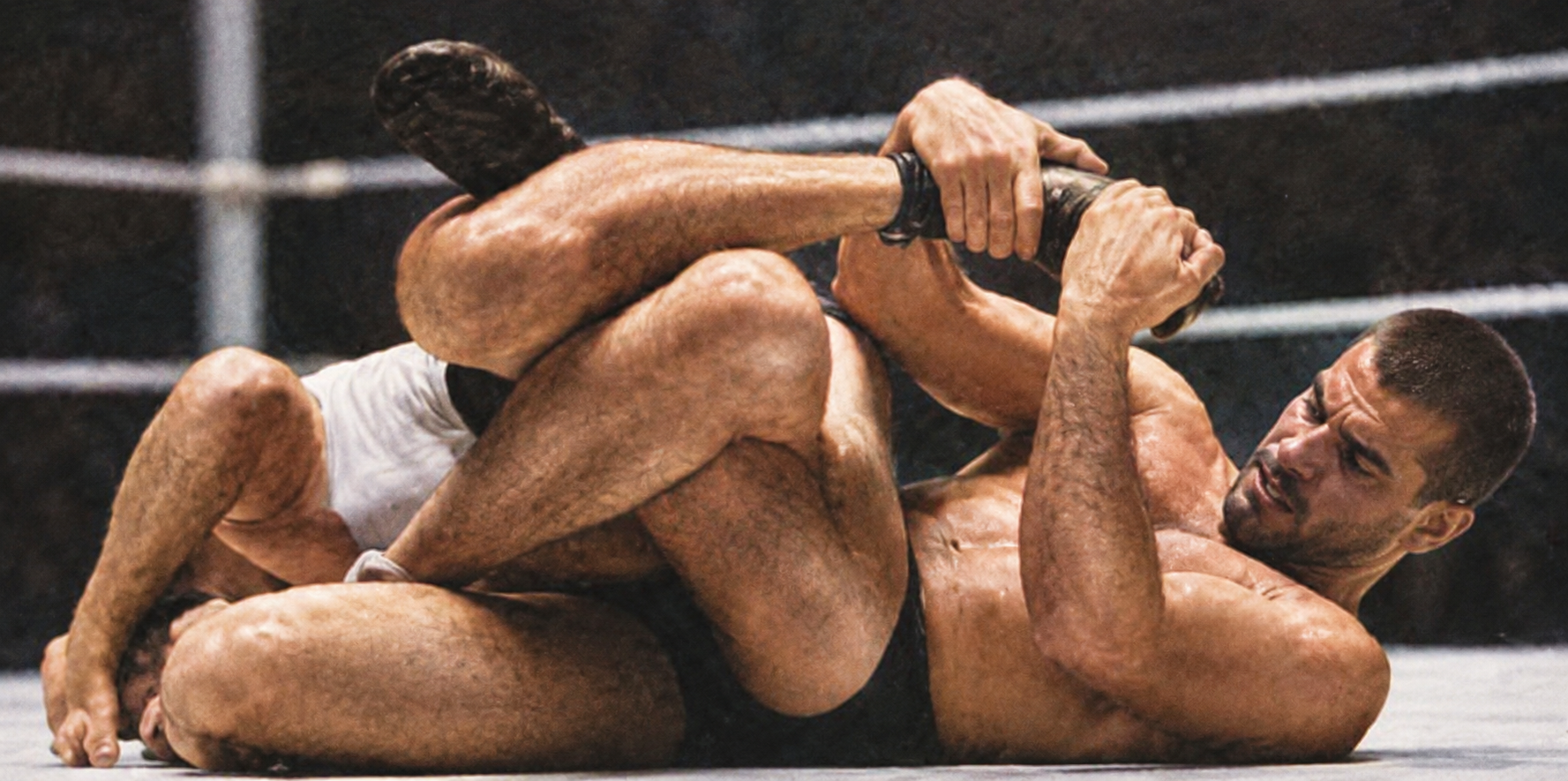
Between 1999 and 2000, in Japan, he fought four members of the family that had won in Denver, and he beat all four. He beat Royler Gracie with a kimura, which is to say with the double wrist lock, the carnival hold the Brazilians had renamed after the judoka who broke Helio's arm with it. He fought Royce, the man from Denver himself, for the ninety minutes at the top of this page, until the family threw the towel. He beat Renzo with the same wrist lock and broke his arm doing it, and Renzo, to his enormous credit, told the world afterward that it had been a clean hold cleanly applied. He beat Ryan. Japan called him the Gracie Hunter. The family that had spent seventy years proving that its art answered every question had been answered, four times, by the art its own rivals across town in Rio had been built from, carried in the hands of a man from the fake sport.
Now the whole ledger, because this Farm does not end a man's story at the podium. He was, for two years, the most beloved fighter in Japan and possibly on earth, a small clever man who beat giants with holds from a county fair and grinned while he did it. And then he kept fighting. He fought a Brazilian striker far larger than himself and was beaten badly, and fought him again, and again, and lost every time, and took beatings across the next decade that no man should take, knocked unconscious in rings and cages long after the men who loved him had begged him to stop. He fought into his forties on a body that had been broken more times than he could count, and by the end there were men in his own sport who would not watch. He never did anything dishonorable in a ring. He simply could not leave one, and the cost of that is written on him now in a way this room will not pretend it cannot see.
Hold both halves of him. The Gracie Hunter proved that the oldest submission art in the West, kept alive in a mining shed and a carnival tent and a Japanese dojo, could answer the most proven family in the history of fighting. And the man who could not stop proved that the art does not tell a man when to quit, and that the tap, the one honest gesture every room on this floor is built on, is a thing a man has to be willing to make for his own life and not only for a round.
Shoot and Work
Two words, and the room exists to hand them over.
A shoot is real. The outcome is not known before it happens, both men are trying, and what the crowd sees is what occurred. A work is arranged. The outcome is decided, the men are cooperating, and what the crowd sees is a performance of a fight, however skilled and however dangerous. Neither word is an insult. Professional wrestling is a work and says so now, and the men who do it are athletes. The carnival was a shoot, and the show that replaced it was a work, and the tragedy above this room was not that the work existed. It was that the work was sold as a shoot, and the men who could tell the difference were paid to keep quiet.
The Japanese branch matters because it is the only place in the art's history where a work deliberately turned itself back into a shoot, in public, ring by ring, over a decade, at the cost of its founders' careers and bodies. And the two words it left behind are the fastest test a man can run on any room he ever walks into. A gym can be a work. A sparring round can be a work, when the better man is carrying the worse one and both of them are pretending otherwise. A belt can be a work. A whole martial art can be a work, and many are, and the men inside them do not know, because nobody in the building has ever shot. The last room on this mat is going to ask which one your own training has been, and it will not accept the answer you give. It will find out.
Where the Art Is Kept, This Year
For a documentary crew, or a man who wants to stand where the shoot lives, as of the autumn of 2026.
Pancrase is still running, a card nearly every month through 2026, a real fighting promotion now under the modern cage rules, and a man at one of its cards is watching the promotion that removed the fake. Shooto is still running, and its amateur system is still the door most Japanese fighters walk through first. The shoot style itself, the work that looks like a shoot, has been revived twice by one of the old federation's men, most recently under a brand that carries the old federation's initials inside a larger wrestling promotion founded in 2020, and it is a work, honestly labeled, done by men who can shoot, which is the most the style ever was and is worth seeing for that. And the man in the mask, in his late fifties, founded a team grappling promotion in 2018, five men a side, winner stays on, all submission, and it ran in Dubai in October 2025 with teams captained by himself and by the Gracie whose arm he broke, and it runs in Kyoto on the twenty-fifth of July 2026 in the old martial arts hall there. The Hunter and the family, on the same card, twenty-five years on, in a shoot.
Where This Sits
Third of three beneath the tent, and the room where the bloodline rejoins the floor. A man has walked the whole ground now: the jacket hall and its subsections, the jacket off and its three rooms, the tent and its three. He carries the ladder and the tap and the ties and the hooks, the games and the audit, the era before the legs and the sport this year, and the oldest crown on a dead man and the newest belt in a fight promotion's studio. And he carries two words that no other room on the mat could have given him, because they were coined in a carnival and proved in a Japanese ring, and they are the only tool that measures the thing the last room measures.
The floor is finished. Everything on it was learned against men who knew him, and the small man in the mask spent his whole career proving that the men who know you are the ones who cannot tell you what you are. The last room on the mat has no art in it. It has a stranger, a gym across town, and the question this room just handed you.