
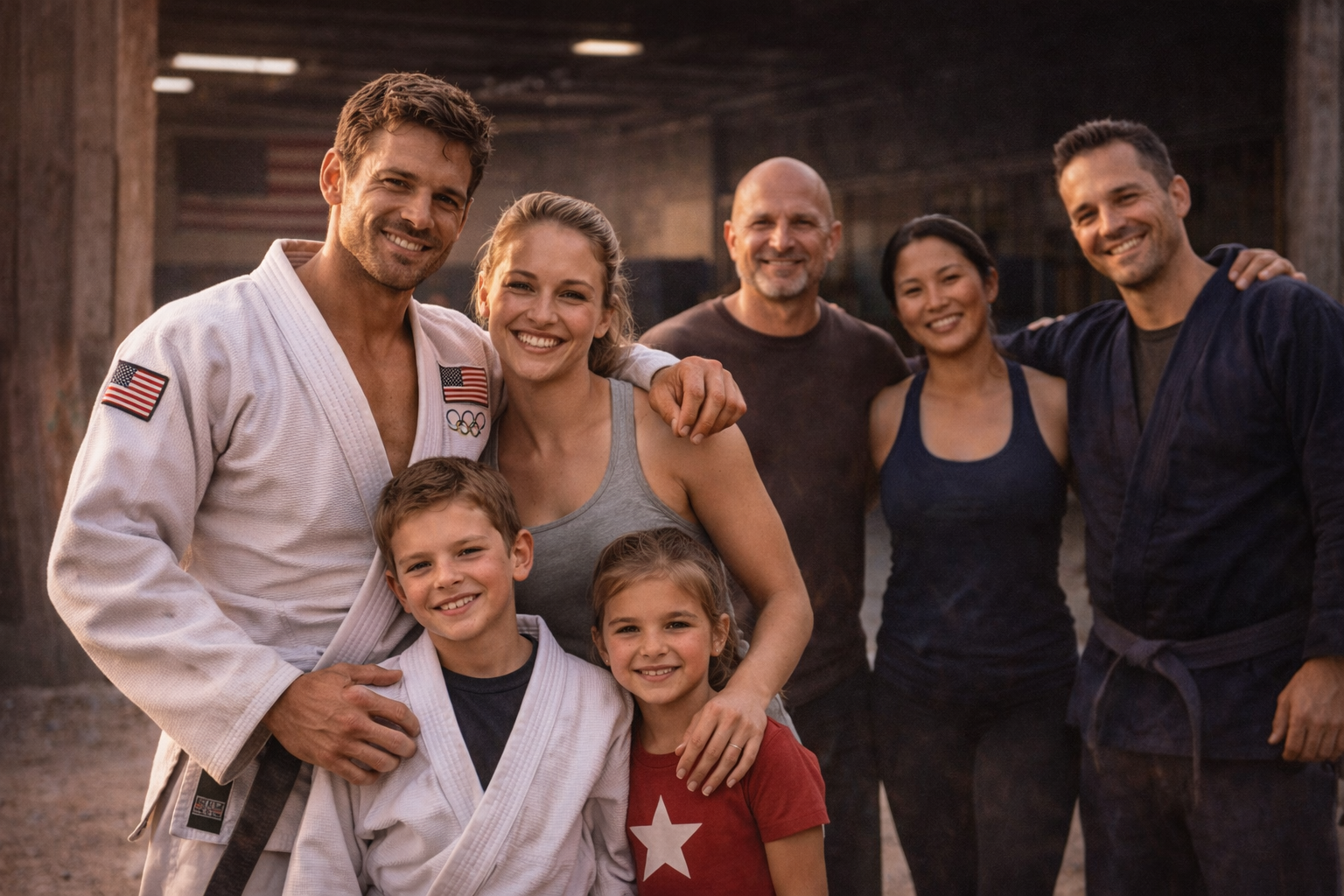
Friends & Family
Family Values
Spheres of Influence
Friends & Friendship
"A friend loves at all times, and a brother is born for adversity." — Proverbs 17:17
The Ground You Stand On
Before the Shepherd teaches you a thing about choosing a wife, he wants you to look at who is already sitting at the fire. Some of them you picked. Most of them you didn't. The family you were born into was handed to you before you could speak a word — you did not choose your mother, your father, the brother you fought with at eight and again at thirty-eight, the blood you carry whether you like it or not. And then, as you grew, you started lighting fires of your own: the friend from the old street, the one who stayed when the others drifted, the handful of men a person gathers across a life if he is paying any attention at all.
This is the ground the whole Hearth stands on. It is the oldest part of the property and the part most men stop tending the moment a marriage gives them somewhere else to put their attention. That is a mistake, and the Shepherd has watched it cost men everything. Because every other bond a man builds — the wife, the children, the name he leaves — he builds with hands that were trained right here, on the people he did not choose and the friends he did. Learn to honor the people you were given, and you become a man fit to be trusted by the one you choose.
The People You Didn't Choose, and the Ones You Did
There are two kinds of bonds on this ground, and a man needs both.
The first kind was assigned to him. Family is the bond a man did not earn and cannot return — the parents who raised him well or badly, the siblings who share his history, the extended blood that shows up at the funerals and the holidays. A man does not get to pick this, and that is the whole lesson in it. Family is where he first learns to honor people whose failures he can see plainly, to keep a bond he cannot quit, to love someone who is difficult because the loving is right and not because it is easy. A man who can only love people he selected for their convenience has not learned to love at all. He has learned to shop.
The second kind he built himself. Friendship is the bond no law and no blood requires — the man chose it, and the other man chose him back, and across the years it either deepened into something that holds weight or it quietly went cold. This is where a man learns loyalty as a decision: the call placed when a friend has gone silent too long, the visit made when the calendar fought him on it, the showing-up that nobody forced and everybody remembers. A friendship at thirty years is a different thing entirely than a friendship at three. You cannot manufacture the long ones in a hurry. You can only start early and keep showing up.
The modern world is engineered against both. The extended family that used to live down the road now lives four states away. The friendships a man forms in his twenties get scattered by every move the career demands, until he looks up at forty-five with a wife, a job, some colleagues — and almost no one left who knew him before any of it. None of that is his fault. The thinning is the water every modern man swims in. But it is still his to fight, because the bonds the world dissolves are the exact bonds that hold a man together when the hard season comes. The man who tended this ground has a brotherhood to stand him up when the marriage strains and the career breaks. The man who let it go cold faces those same storms alone — and finds out, too late, that no amount of success at the office ever built him a single person to call at two in the morning.
How a Man Goes Wrong Here
The failures on this ground are quiet and they are common. Name them now, so you see them coming.
Running from the family. The home of origin was hard, so the man handles it by avoidance — the mother's pattern muted instead of faced, the father's failures stored instead of forgiven, the brother not spoken to in three years over something neither can quite name anymore. The avoidance feels like peace and works like rot. The unprocessed past does not disappear; it gets aimed at the wife and handed down to the children instead. A man works that wound in SPIRIT, in private, and then engages his family as a man with his own feet under him.
Never leaving the family. The opposite ditch. The man never grew up out of the house he came from — still defers to his mother on decisions that are not hers, still runs his marriage through what his parents would think, still cannot make a move without the old household in the room. His wife ends up married to a crowd. A man honors his parents without being run by them. There is a difference between a son and a subject.
Letting the friendships drift. He stopped making the calls and stopped scheduling the visits, read every silence as distance instead of a cue to reach out, and woke up with no friend who predates his current job. The bonds that carry a man through a crisis have to be built before the crisis arrives. He built nothing, and the crisis came anyway.
Outsourcing his whole circle to his wife. He has no men of his own. He goes to the gatherings her friendships generate, sees the people her family invites, and quietly has no one who is his. It looks fine until the marriage hits a wall or she is simply unavailable — and then he discovers he handed his entire social life to one person. A man keeps his own brothers precisely so that he comes to his marriage as someone, not as a dependent.
Friends in name only. He has a full roster of guys he watches the game with and trades jokes with, and not one he could tell the truth to. Surface friendship photographs like the real thing and holds nothing when weight lands on it. A man builds at least a few bonds deep enough to be honest inside — where he can give correction and take it, and where the other man has actually seen him at his worst and stayed.
Letting the circle pick him. His social world got assigned by his employer, his industry, his neighborhood — whatever happened to surround him — and he never once chose it on purpose. So his whole picture of the world drifts to match whatever crowd captured him. A man chooses his circles deliberately, tends the ones that sharpen him, and walks away from the ones quietly corroding his character. Show him the five men closest to him and he has shown you the man he is becoming.
The Three Parts of This Ground
Three fires are tended here, moving outward from the blood a man was born into to the wide world he moves through.
Family Matters — the house you came from. The parents, the siblings, the cousins and in-laws, the extended blood a man came out of and keeps navigating his whole life. This is where the deepest patterns live — the warmth or the cold a man inherited, the broken homes and the dysfunction that travel down a line until someone stops them, the holiday table that is either a gift or a minefield. A man who has faced his family honestly has done the hardest and most important work on this ground, because everything else he builds sits on top of it.
Friends & Friendship — the brothers you chose. The friendships that survive the moves and the years, the brotherhood a man builds on purpose, the hard-won permission to actually feel something around another man that the culture trained out of him. This is the inner circle and the outer one — the few he trusts with the truth, and the wider company he keeps. These chosen bonds are what hold a man upright when the rest of his life is being tested.
Social Circles — the wider world. The professional networks, the community he lives inside, the rooms his name travels through, the institutions whose company shapes him whether he notices or not. A man chooses these on purpose, refuses the ones that pull him the wrong way, feeds the ones that build him, and walks into every room as a contributor rather than a consumer. The wider world is the field a man's life is played on — he tends the field instead of letting it run him.
The Three Pillars on This Ground
Three questions filter every bond a man keeps here. TRUTH. LOVE. LAW. Always in that order.
TRUTH is seeing the people as they actually are. The family as it really was, not the sanitized version that spares him the grief. The friend as he really is, not the version loyalty wants him to be. The circle as it actually functions, not the face it shows in public. A man cannot tend what he refuses to see clearly.
LOVE is who the bond is for. A man who builds relational skill and then uses it to manage his family, guilt his friends, or keep people orbiting on his terms has failed this pillar no matter how full his calendar looks. The skill is for serving people, never for working them. Every move on this ground runs through one question: am I serving this person, or using them?
LAW is keeping the bond when the feeling is gone. The brother stood by through the season he was unbearable. The parent honored despite the failures a man can now see plainly. The friend called even when there is nothing to say. Feeling comes and goes with the weather; the showing-up is what holds — and a man whose presence is as reliable as his word is the rarest one left.
The 22 Family Rules
This ground carries a working list of family rules — the plain standards a household can adopt and pass down, posted where the children will actually read them and lived out until they become the way the home simply runs. The list is a starting point, not scripture. A man takes it, cuts what does not fit his house, adds what does, and makes the rules his family's own. The point is not the particular twenty-two. The point is that a household runs better on rules a man chose on purpose than on rules nobody ever named.
What This Ground Feeds
This is the training ground for everything warmer that follows. The man who learned loyalty, repair, and honor here carries all of it up the rest of the climb — into Romance & Intimacy, because the man careless with a friend will be careless with a wife; into Parenting, where his children inherit the friendships they watch him keep and the wounds he chose to process instead of pass down; into Legacy, because the bonds built here are the ones that stand at the funeral. It feeds the other Kingdoms too — the brotherhood that steadies DEFENSE, the hard interior work of SPIRIT, the stress that real bonds absorb for HEALTH, and the gathered company that brings FUN alive.
But before any of that climb, the Shepherd turns you back to this same fire — because there is one more sitting at it you have not yet accounted for. You looked hard at the people you were given and the people you chose, and every one of them can push back: keep score, name your failures, demand repair, walk out the door. One bond on this ground does none of that. It lies near the hearth, asks nothing but your presence, and keeps no score at all — and for exactly that reason it is the truest mirror of the loyalty you just learned that a man will ever own. How you treat the one who cannot complain — when no one is watching and you are at your worst — is who you actually are. The Shepherd nods toward the dog already lying at your feet.
Lets look at the bond that keeps no score, and the cleanest mirror on the Estate.