
Pets & Animals
Raising Canines
"A righteous man regardeth the life of his beast: but the tender mercies of the wicked are cruel." — Proverbs 12:10
🐾 Man's Best Friend 🐾
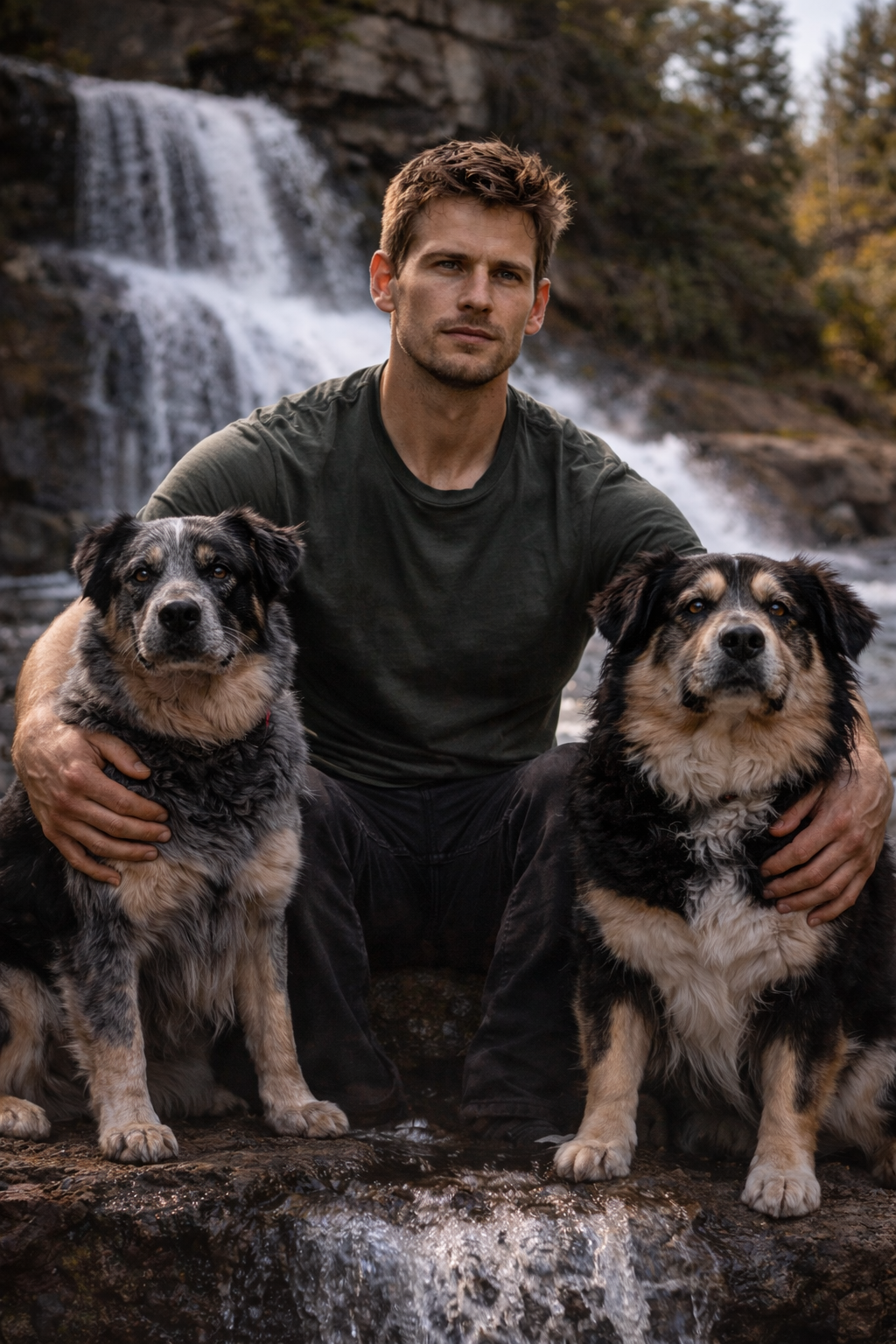
The dog is already at the fire when the Shepherd brings you to this part of the Estate. He has been there the whole time — lying near the hearth where the heat is best, lifting his head when the door opens, following the Shepherd out to the barn and back without being asked. "Watch him a minute," the Shepherd says. "He didn't earn his spot here and he can't pay for it. He can't argue with me, can't bargain, can't quit and find a better man down the road. He just decided I was his, and he has never once changed his mind about it." He scratches the dog behind the ear. "Every other bond on this Estate has two people keeping score, whether they admit it or not. This one keeps no score at all. Which is exactly why it tells the truth about you faster than anything else here."
There is a reason the dog has been called man's best friend for as long as men have written anything down. No other creature volunteered for us the way this one did — left the wild, lay down by the fire, and threw in its whole short life with ours for nothing more than food, shelter, and a place at our feet. A man can go his whole life without ever being loved that plainly by another human being. The dog offers it on the first day and never takes it back. The horse that learns your voice, the cat that picks your lap out of every lap in the house, the animal a child begs for and then grows up beside — these are the bonds with the creatures who cannot speak for themselves, and they are some of the cleanest, least complicated love a man will ever be handed.
They are also, for that exact reason, the truest mirror he owns.
The Clean Mirror
Here is what the Shepherd wants you to see. Every human being in your life can push back. Your wife can refuse a pattern. Your friend can name a failure and demand you fix it. Your grown child can sit you down and tell you what you got wrong. The animal cannot. The dog in the yard cannot file a complaint. The horse with the bad hoof cannot go find a better keeper. The cat you stopped paying attention to once it got old and quiet cannot tell a single soul what happened.
That is what makes the animal the cleanest reading of a man's actual character there is. How a man treats the creature who has no recourse — when he is tired, when he is broke, when the dog is being inconvenient and nobody is watching — is who the man actually is underneath the version everyone else gets to see. The house with the half-starved, untrained, ignored dog in the back is almost never a house running on real order, no matter how it looks from the street. The dog tells the truth. The family photos do not.
So a man uses the mirror on purpose. He checks how he treats the animal in his worst hour, not his best. He notices whether the dog still gets walked during the busy season, whether the vet bill gets paid during the tight one, whether the old animal that stopped being cute still gets the same hand on its head it got as a pup. A man who passes that test has proven something about himself that no human relationship can show him quite as plainly. And the love runs back the other way: the man whose guard is too high to be fully soft with people often finds himself loved wide-open by the dog at his feet — no performance required, no explanation, no need to have figured anything out — and years of being received like that will soften a man in a way nothing else reaches. The dog asks nothing of him but his presence, and in giving it, the man is quietly trained for the people who need the same thing and are harder to give it to.
How a Man Goes Wrong Here
The failures with animals are common and mostly quiet. Name them so you see them coming.
Keeping the animal as a prop. He picked the breed for what it says about him — the tough dog, the rare dog, the status dog — and never once engaged the actual creature or the work that breed needs. The animal is decoration for his self-image. A man chooses an animal for how it fits his real life, not for the message it sends the neighbors.
Treating the animal as disposable. It was cute, then it was work, then it was gone — rehomed when it got big, surrendered when the baby came, written off the moment it became inconvenient. The reasons always sound plausible. They are usually cover. A man counts the cost before he brings a creature home, and once it is home, he keeps it for the whole of its life.
Neglect by drift. No single cruel act — just chronic under-care that adds up across years. Not enough exercise. Skipped vet visits. No training. No company. The animal's whole life quietly diminished by inattention. A man treats the creature's real needs as a real obligation, not an optional one.
Turning the animal into a person. He feeds it off his plate, lets it run the house, hands it freedoms its species cannot handle — and then complains about the behavior he created. Over-indulging an animal in the ways it does not need while neglecting the ways it does is its own kind of failure. A man loves the animal as the animal it is, not as a furry child.
Never training it. He brought the dog home and taught it nothing, let it build every habit the household now resents, and blames the dog for problems the man created by abdicating. An untrained dog is a man's failure wearing a leash. A man trains the animal to live well inside his home.
Asking the animal to replace people. The dog became the whole heart because the marriage failed or never happened; the house full of animals stands in for the family that was supposed to be there. Sometimes that is a season, sometimes a choice — but a man learns to tell when the animal is being asked to carry weight it was never built for, and does the human work in SPIRIT and Romance & Intimacy instead of leaning the whole load on a creature that cannot bear it.
Care & Feeding
Loving an animal well is mostly unglamorous and daily. With a dog — the creature most fully woven into a man's household, and the one this part of the Estate treats first — it comes down to a few honest obligations: real food, real movement, real grooming, and real medical care across the whole life. The deeper map lives in Raising Canines and its rooms — Care & Feeding, Dog Grooming, Obedience Training, Vet Visits, Dog Parks & Dog-friendly Hikes, and Vacationing with Pets.
On food, the principle comes before any brand: a named whole protein as the first ingredient, a formula that meets the AAFCO "complete and balanced" standard for the dog's life stage, and as little cheap filler, by-product, and dye as a man can manage. The pet-food aisle has produced as much metabolic disease in dogs as the grocery aisle has in men, and for the same reason — cheap, processed, over-sold. Among the brands that actually hold up:
Fresh / gently cooked: The Farmer's Dog, Ollie, Just Food for Dogs — real food, portioned to the dog; the premium end, worth it for many households.
High-quality kibble: Orijen, Acana, Open Farm, Ziwi Peak — high named-meat content, honest labels.
Raw / freeze-dried: Stella & Chewy's, Primal, Steve's — closest to the ancestral diet; demands more handling and care.
Vet-research-backed: Purina Pro Plan, Hill's Science Diet, Royal Canin — less glamorous labels, but the names with real feeding trials and veterinary nutritionists behind them, and the right call for dogs with medical needs.
None of that replaces your own vet, who knows the specific animal in front of you — the breed, the age, the gut, the allergies. A man reads the actual dog, not the marketing.
Training: From Pavlov's Bell to the Modern Leash
A trained dog is a dog that gets to have a bigger life — more freedom, more trust, more places it is welcome — and an untrained one is a prisoner of its own bad habits. Training is not domination. It is communication. And a man does well to understand the methods, because the best trainers all draw on the same handful of principles, named over a century of study. The full work lives in Obedience Training; the map of it runs like this.
Classical conditioning — the foundation. Ivan Pavlov rang a bell before he fed his dogs, and soon the bell alone made them salivate. That is association, and it is the bedrock under everything else: a dog learns to link one thing with another. It is why a marker — a clicker, or a sharp "yes" — works at all. The sound itself means nothing until it is paired, again and again, with something good. Then the sound becomes the promise, and the dog will work for the sound.
Operant conditioning and the clicker — shaping behavior by its consequences. B.F. Skinner showed that behavior is shaped by what follows it: rewarded behavior repeats, ignored behavior fades. Karen Pryor took the marker-and-reward method off the marine-mammal trainer's dock — where you cannot leash-correct a dolphin, so you must train with reinforcement — and brought it to dogs. Clicker training is the result: mark the instant the dog gets it right, then pay. Clean, precise, and built on the dog's eagerness rather than its fear.
The modern reward-based school — cutting edge. Dr. Ian Dunbar revolutionized puppy training with early socialization and lure-reward methods. Victoria Stilwell carried positive-reinforcement training into the mainstream. A newer generation — trainers like Zak George — has put reward-based methods in front of millions. The throughline: build the behavior you want and make the right choice the rewarding one, rather than only punishing the wrong one.
Leadership and balanced training. Cesar Millan moved the conversation back to the human end of the leash — calm, assertive energy, real exercise, clear rules, and a man who actually leads instead of pleads. Balanced trainers fold in fair, well-timed corrections (leash pressure, and modern low-stimulation e-collars used by skilled hands like Larry Krohn or Tom Davis) on top of a reward foundation. This camp and the purely-positive camp argue, loudly, and a man can learn from both.
Where project7 lands: relationship and leadership first, a reward-based foundation always, and corrections — when used at all — fair, timed, and humane, never cruelty. Proverbs 12:10 is the fence around all of it. A righteous man regardeth the life of his beast. You can be firm with an animal and still be gentle. The man who confuses harshness with leadership has misunderstood both.
Beyond the Dog
The dog leads here because it lives closest to a man's daily life, but the same bond and the same obligation scale to whatever creature a man keeps. The horse asks for handling, patience, and a voice it can trust — the natural-horsemanship men like Buck Brannaman and Monty Roberts built whole lives on gentling rather than breaking. The cat asks for a predictable rhythm and the dignity of being a cat. The livestock a man keeps asks for humane handling, the standard Temple Grandin spent her life teaching. Different species, different language — one principle underneath all of them: a man stewards the creatures placed under his hand, and he is measured by how he does it.
The Three Pillars Here
Three questions filter how a man keeps an animal. TRUTH. LOVE. LAW. Always in that order.
TRUTH is seeing the animal as it actually is — the species, the breed, the real temperament and real needs — instead of the prop or the ornament or the furry child a man would rather it be. You cannot care well for a creature you refuse to see honestly.
LOVE is caring in the language the animal can actually receive. The dog needs walking, not table scraps. The horse needs handling, not sentiment. A man delivers what the creature can use and learns to receive the plain, scoreless love it offers back — a bond that is real even though it runs outside every category the human relationships use.
LAW is the obligation kept across the whole life, not just the easy years. Through the move, the tight budget, the busy season, the old age when the animal is no longer photogenic and the bond is mostly vet bills and patience. A man brought the creature home; the vow runs to the end of its life, not the end of its convenience.
What the Mirror Reflects
This bond trains a man for the rest of the Estate. The patience, consistency, and showing-up an animal requires are the same muscles a wife and children require — and the dog will build them in a man before he ever knows he is in training. It runs straight into HEALTH, because the dog has to be walked and the walking gives a man the daily movement his desk would never have handed him. It feeds DEFENSE, because a trained working dog is part of how a household is guarded. It echoes SPIRIT, because tending a creature who cannot demand justice is a small rehearsal of the gentleness God shows the weak — a bruised reed he will not break — practiced first on the animal and then carried to the people. And the children are watching the whole time: how a father treats the family dog is the first lesson they ever get in how the strong are supposed to treat the weak.
Tools & Resources
Trainers worth learning from — Cesar Millan (leadership and calm-assertive energy), Dr. Ian Dunbar (puppy and lure-reward), Karen Pryor (clicker / marker training), Victoria Stilwell (positive reinforcement), Zak George (modern reward-based), Larry Krohn / Tom Davis (balanced, e-collar). Horses: Buck Brannaman, Monty Roberts. Livestock and broad species: Temple Grandin.
Food — match the brand to the dog with your vet; principle first (named protein, AAFCO complete-and-balanced, minimal filler). Reputable names span fresh (The Farmer's Dog, Ollie), kibble (Orijen, Acana, Open Farm), raw (Stella & Chewy's, Primal), and vet-trial-backed (Purina Pro Plan, Hill's Science Diet, Royal Canin).
Rescue & adoption — Best Friends Animal Society, for the man whose stewardship begins with taking in a creature no one else would.
Cross References
Raising Canines
Care & Feeding
Obedience Training
Dog Grooming
Vet Visits
Dog Parks & Dog-friendly Hikes
Vacationing with Pets
Diet & Nutrition
Raising Canines
Exercise & Fitness - Raising Canines
Canine Gut Health
Raising Canines
Relationships
LOVE
HEALTH
DEFENSE
SPIRIT