
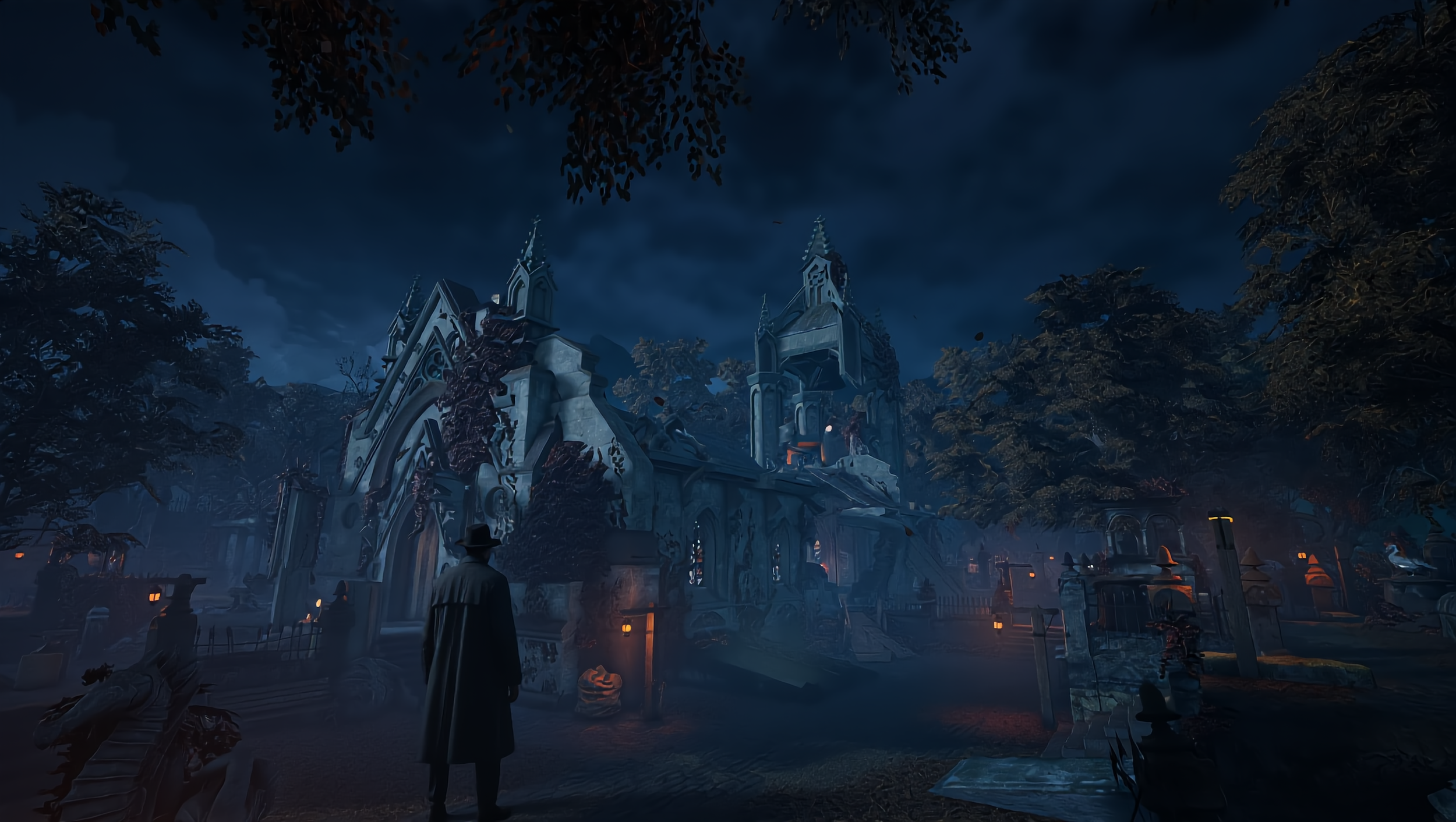
Paranormal & Supernatural Activity
Paranormal & Supernatural Activity — On Site at 3 AM
The investigator sets down the gear bag in the room where it happened. EMF meter on the dresser. Audio recorder on the nightstand running for EVPs. Thermal camera in the corner. The witness is in the next room, has agreed to be on record, and has not slept properly in months. The investigator sits in the dark and waits. Most of these nights produce nothing. Some of them produce something. The discipline is to be in the room when it does, with the equipment running, without flinching, and with a clear enough head to record what actually happened rather than what the imagination wanted.
Welcome to Paranormal & Supernatural Activity. This is the section that investigates phenomena the modern materialist worldview has officially excluded from the catalog of what is possible. The exclusion is the methodology problem the section was built to address. A great many ordinary men, in ordinary lives, encounter the paranormal at some point. They rarely speak about it. The cultural cost is too high. The result is a vast unrecorded data set of human experience the official record cannot afford to acknowledge — and that this section refuses to leave unexamined.
The investigation does not require credulity. The investigator is the man with the equipment, the recorded testimony, the on-site notes, the willingness to admit when nothing happened, and the steadiness to document accurately when something did. The Christian foreground holds throughout. The supernatural is real. Not all of it is benign. The student who studies this material learns to recognize the categories before he encounters them in his own life — and most men, eventually, do.
The Two Failure Modes
The section is built to forestall two opposite failures. The disciplined posture sits between them.
The first failure is materialist dismissal. The position that the paranormal does not exist, that all reported encounters are misidentification or hallucination or fraud, and that the institutional refusal to investigate the field is itself proof of the field's non-existence. This has been the dominant academic posture across the post-Enlightenment Western intellectual landscape, and it has produced the unrecorded-experience problem the opening paragraph names. A man whose worldview cannot accommodate his own genuine encounter has nowhere to put the encounter except into shame or denial. Most of them choose silence.
The second failure is credulous absorption. The position that every reported encounter is genuine, that the encountered entities are typically benign or even spiritually beneficial, and that the man should pursue paranormal contact as a vehicle for personal spiritual development. This has been the dominant register in the contemporary popular paranormal-investigation and metaphysical-spirituality industries, and it has produced documented harm across the population that has engaged the field without theological discrimination. The séance circle, the Ouija board, the channeled communication, the spirit guide — these are not neutral activities. The credulous register treats them as harmless self-discovery. They are not.
The disciplined posture is the third option. Recognition that genuine paranormal phenomena occur. Recognition that the encountered presence is typically not what the popular framework assumes it to be. Disciplined Christian engagement that allows the man to recognize the phenomena when they appear in his own life or the lives of those he is responsible for, without absorbing the framework that misreads them.
The Taxonomic Landscape
The category is broader than the contemporary popular paranormal-investigation register typically engages, and the disciplined investigator distinguishes among its parts rather than collapsing them into one.
Ghost and haunting phenomena — apparitions, residual hauntings (the location replays an emotional imprint), intelligent hauntings (an entity responds and interacts), poltergeist activity (kinetic effects without visible cause). Cross-cultural and trans-historical record. Substantial contemporary case literature.
Cryptid sightings — Sasquatch / Bigfoot in North America, Yeti in the Himalayas, Yeren in China, Yowie in Australia, the various regional traditions of large humanoid or anomalous animal beings encountered across substantial geographic and cultural distance.
Psi phenomena — telepathy, precognition, telekinesis, the broader parapsychological field the J.B. Rhine experimental tradition documented at Duke from the 1930s onward and the SRI-era work the Project Stargate file in CIA Declassified develops.
Near-death experiences — the substantial clinical-research literature including Bruce Greyson at the University of Virginia, Pim van Lommel's Lancet cardiac-arrest study, Sam Parnia's AWARE studies, and the broader academic field. Veridical perception during clinical death has been documented under conditions the materialist explanation cannot fully account for.
Out-of-body experiences and the broader anomalous-perception field — overlapping with NDE literature and with the parapsychological tradition above.
Demonic and angelic operations — developed at depth in the Demonology cluster and the Angels and Demons / Evil Spirits articles. Substantial overlap with the categories above, and the canonical framework is where the section's theological discrimination is anchored.
The categories likely have different operating mechanisms. The disciplined investigator does not assume that paranormal names a single thing.
The Canonical Biblical Witness
The canon does not deny the paranormal. The canon documents it across both Testaments and supplies the discrimination on what the phenomena are and under whose authority they operate.
Apparitions of the dead. 1 Samuel 28 — the witch of Endor case, in which Saul seeks Samuel through a forbidden medium and Samuel actually appears. The canonical handling establishes two things at once: genuine spiritual contact with the deceased can occur, and pursuing such contact through divination is canonically forbidden under pain of judgment. Both halves are load-bearing.
Angelic appearances. Substantial across both Testaments — the Genesis 18 Mamre visit, the Genesis 32 wrestling at Peniel, Joshua 5's Captain of the Lord's host, Daniel's encounters, the Gospels' birth narratives, Acts' deliverances of Peter and Paul. The canon's do not be afraid salutation from angelic visitors is itself diagnostic: the recipient's default reaction is terror, and the angelic visitor must explicitly disarm it before delivering the message.
Demonic operations including poltergeist-pattern phenomena. The various Gospel exorcisms, the Acts encounters with possessed slave girls and the sons of Sceva, the broader spiritual-warfare record. Kinetic effects, anomalous strength, multiple-voice phenomena, predictive utterance — all documented.
Prophetic-precognitive phenomena. The prophetic tradition's documented foreknowledge — Isaiah's Cyrus prophecy named by name two centuries early, Daniel's empire sequence, the Olivet Discourse, Acts 11 and 21 Agabus prophecies. The canon names precognitive disclosure as a real category and reserves it to the Holy Spirit's authority.
Transfiguration-tier theophany. Matthew 17, Mark 9, Luke 9 — Christ's appearance with Moses and Elijah on the mountain, the disciples' eyewitness testimony preserved in Peter's epistle (we were eyewitnesses of his majesty, 2 Peter 1:16). The deceased patriarchs appear, in glory, beside the living Christ. The category is real.
Post-resurrection bodily appearances. The forty days, the multiple eyewitness groups, the Emmaus walk, the upper room appearance through closed doors, the breakfast at the Sea of Tiberias. The resurrected body operates on rules the pre-cross body did not — and the canon documents the operating rules at field-witness depth.
Translation and rapture phenomena. Philip caught away from the Ethiopian eunuch to Azotus in Acts 8. Paul's third-heaven ascent in 2 Corinthians 12. Enoch and Elijah's translations. The category is canonical.
The canon's posture is consistent. The phenomena are real. Some operate under canonical authority. Some operate under the rebellious spiritual order. The man's pursuit of spiritual contact through technique — necromancy, divination, the broader familiar spirits category — is forbidden regardless of what the technique produces. The man's recognition of what God sovereignly discloses is encouraged. The two are not the same. The Christian engagement with the paranormal is not the materialist denial that the phenomena exist. It is the canonical discrimination on what the phenomena are.
The Cryptid Question
The cryptid category — the regional traditions of large humanoid or anomalous animal beings encountered across substantial geographic distance — has been documented in substantial folkloric, eyewitness, and contemporary photographic and video record. The dominant academic position treats the field as misidentification of known animals, hoaxes, or cultural narrative without genuine biological referent. The contested position holds that the record documents real cryptozoological phenomena.
The canonical Christian reading applied to the cryptid field has occasionally suggested possible Nephilim-survival or fallen-watcher-descendant connections (per the Genesis 6 Theory and Fallen Angels & Giants material) without producing a single dominant reading. The cluster's discipline applies the named-tier convention. Tier 1 — documented eyewitness record, substantial cross-cultural recurrence pattern, the photographic and video archive at the credibility levels it actually supports. Tier 2 — specific cryptozoological-existence claims, the contested interpretive frameworks (Nephilim-survival, interdimensional-portal, government-cover-up). Tier 3 — wholesale conspiracy frameworks and the unfalsifiable mythologies that have grown around specific named regions and figures.
The man does not have to settle every contested specific to read the field honestly. The trans-cultural recurrence of the pattern is itself the data point. Whatever the operating reality of the cryptid category is, something is producing the recurring witness across populations that have no contact with each other. The category does not collapse into nothing because the academy refuses to investigate it.
Skinwalker Ranch — the Contemporary Anchor
Skinwalker Ranch is the canonical contemporary case. Northern Utah, Uintah Basin, roughly five hundred acres adjacent to the Ute reservation. The location's documented record combines substantial paranormal-investigation activity across multiple decades, multiple categories of reported phenomena simultaneously (UAP sightings, cryptid encounters, geophysical anomalies, animal-mutilation patterns, psi-phenomena reports), substantial institutional engagement (Robert Bigelow's NIDS in the late 1990s, the subsequent Brandon Fugal acquisition and the Secret of Skinwalker Ranch television documentation, the broader academic and documentary engagement), and the indigenous-tradition layer the Navajo yee naaldlooshii term the location is named for points at.
The site matters to the cluster for one specific reason. The documented operating record establishes that the paranormal field is not isolated to fringe-credulity contexts. Serious institutional resources have been deployed against the site over multiple decades, by people whose careers do not benefit from finding nothing. The documented record is sufficient to warrant the man's recognition of the field as a real category regardless of where the specific interpretive conclusions land. Skinwalker is not the only site of its kind. Skinwalker is the one with the cleanest contemporary documentary footprint.
The discrimination the Shamanism sibling article develops applies directly here. Indigenous-tradition engagement with the same field has often produced ritual frameworks the canonical Christian engagement names and refuses. The site's name carries the diagnostic. The student reads with the foreground operative.
The Operational Principle — Fear as the Coupling Channel
The operating principle Roger's field testimony names below is continuous with the canonical Christian disposition toward spiritual-warfare encounters, and it deserves the explicit treatment.
The principle is that the supernatural cannot couple to the man's nervous system without fear. Fear is the channel. Where fear is absent, the encounter has nothing to attach to. Where fear is present, the encounter has the channel the rebellious spiritual order has used since the garden.
The canonical witness is dense and consistent. The angelic salutation do not be afraid is the diagnostic — the first move of legitimate spiritual contact is to disarm the fear that would otherwise produce the coupling. Christ's peace be with you in the upper room after the resurrection serves the same function. Paul's God has not given us a spirit of fear, but of power and love and a sound mind (2 Timothy 1:7) names fear as the spirit the regenerate man has been delivered from. Perfect love casts out fear (1 John 4:18) names love as the canonical operating disposition that displaces the channel fear would have opened.
The corollary principle Roger's testimony names is the one the popular paranormal-investigation industry refuses. Don't be afraid of the supernatural. Don't F with the supernatural. The first half is the canonical do not be afraid. The second half is the canonical prohibition on technique-driven pursuit — Deuteronomy 18, the familiar spirits prohibition, the Acts 19 Ephesus burning of the books, the consistent canonical refusal to authorize the man's seeking. The two halves work together. Fearlessness is not license. License is not fearlessness. The man under covenant operates without fear and without seeking, under the canonical authority that has already been deployed on his behalf.
The Pastoral Function
The pastoral function of the section is twofold.
The first function is recognition. The man should recognize that the paranormal is real, that he or someone he loves may at some point encounter it directly, and that the disciplined Christian framework the cluster trains is the operating disposition the encounter requires. The recognition itself is part of the protection. A man who has never considered the category is the man whose first encounter produces lasting damage. A man who has read the cluster's material is not surprised when it arrives.
The second function is preparation. The man should know the canonical disposition — fear refused, canonical authority deployed, technique-driven pursuit prohibited, pastoral oversight engaged when the encounter exceeds his own discernment — before the encounter arrives, so the disposition is already in place when needed. The man under covenant who has not been prepared is the man whose first encounter often produces lasting damage. The man who has been prepared has the framework and the authority operative when the moment requires them.
A man who reads the paranormal honestly does not become superstitious. He becomes useful. He stops being afraid of the dark. He stops dismissing his sister's experience because he does not have a category for it. He starts being the man the wife or the friend or the child comes to when the encounter arrives, because he is the one in the room who has thought about it before it mattered.
Why It Matters Here
The section is in SPIRIT because what is at stake is the formation of the man's interior relative to the spiritual order that scripture has named since Genesis.
The Christian doctrine of spiritual warfare — Ephesians 6, for we wrestle not against flesh and blood, but against principalities, against powers, against the rulers of the darkness of this world, against spiritual wickedness in high places — assumes that the unseen order is real, that it is engaged, and that the man under covenant is a combatant whether he has been informed of the combat or not. The materialist worldview has spent two centuries telling Western men that the combat is not happening. The combat has continued. The men who absorbed the worldview have been formed without recognition of the field they are actually standing on.
The Christological floor is the anchor. Christ has disarmed the principalities and powers, and made a public spectacle of them, triumphing over them in himself (Colossians 2:15). The authority under which the man under covenant operates is not the authority of his own resistance or his own technique. It is the authority of the One who has already settled the field. The man does not have to be heroic to be safe. He has to be aligned. The alignment is the work the cluster prepares him for.
The substrate is real. The discrimination is the work. The faithfulness is the rest.
Cross References
Research & Investigations
Skinwalker Ranch
Aliens
UFO's & UAP's
Ancient Aliens
Contactee Phenomena
Folklore & Mythology
Shamanism
Mysticism
Hermeticism
Occultism & Mystery Religions
Genesis 6 Theory
Spiritual Dimension
Angels & Demons
Evil Spirits
Demonology
CIA Gateway Process
Project Stargate
Theology
Christology
Eschatology
Gettysburg
Skinwalker Ranch
Winchester Home